a&e features
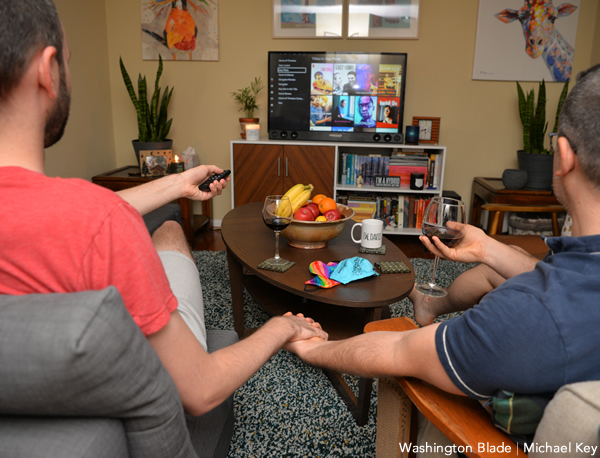
Why do so many gay couples open up their relationships?
Many of us are on autopilot, but we can build more meaningful connections
As gay men, we’ve been through a lot.
For so many years we were deep in the closet, fearful of being arrested, and threatened with pseudo-medical cures.
Then came the Stonewall uprising, the declassification of homosexuality as a psychiatric disorder, and the defeat of sodomy laws. And finally, the legalization of gay marriage.
Now—at least in some parts of the world — we’re free to live our lives exactly like everyone else. No one gets to tell us how to live, whom to love, or what we can or can’t do in the bedroom. We alone call the shots.
Then again, maybe we’re not as free as we think. Ever wonder why so many of us open our relationships? Are we always really deciding for ourselves how we want to live?
Or are we sometimes on autopilot, blithely following expectations and norms of which we aren’t even aware, oblivious to the possible consequences?
Spring, 1987: Although I didn’t know it at the time, my own introduction to the world of gay relationships was following a script that countless gay men have lived.
Growing up in that era, there were no visible gay relationships, no role models. Astoundingly, a gay porn theater/bathhouse did advertise in the Washington Post, my hometown paper, when I was a kid. While this was titillating, I dreamed of something more traditional and soulful for my future than the anonymous encounters and orgies at which those ads hinted.
So when hunky, adorable Justin* asked me out after a meeting of the campus gay group and we started dating, I was over the moon. That is, until my friends Ben and Tom, an older gay couple, shot me right back down to earth when, one evening over dinner, they asked if Justin and I were “exclusive.”
Huh? What a question!
“Just wait,” Tom said knowingly, “Gay men never stay monogamous for long.”
More than 30 years have passed, and the world of gay male relationships remains pretty much the same. Working as a psychologist for the past 25 years, I’ve listened to hundreds of gay clients share their own versions of my long-ago dinner with Ben and Tom. “We just assumed we’d be monogamous, but then this older gay couple told us, ‘yeah, let’s see how long that lasts.’ So we decided to open up our relationship and start playing around.”
New generations have the possibility of proudly visible relationships and recently, marriage. And still, for many of us, open relationships are seen as the default choice in one form or another: “Monogamish.” Only when one partner is out-of-town. Never the same person twice. Only when both partners are present. No kissing. No intercourse. No falling in love. Never in the couple’s home. Never in the couple’s bed. Don’t ask, don’t tell. Disclose everything. Anything goes.
Examining our affinity for non-monogamy can be seen as judgmental or anti-gay, “sex-negative,” tantamount to suggesting that gay men should mimic a heterosexual model that is patriarchal, misogynist, oppressive — and maybe not even really workable for straight people. Questioning our penchant for casual sex while we are coupled is also seen as a challenge to the inspirational (to some) narrative that gay men, free of the constraints of history and tradition, are constructing a fresh, vibrant model of relationships that decouples the unnecessary, pesky, and troublesome bond between emotional fidelity and sexual exclusivity.
But we do not honor our diversity if we expect that any of us should choose (or not choose) any particular role or path. After all, gay men are just as multidimensional, complex, and unique as other men.
And while an open relationship may be the best relationship for some couples to have, successfully being in one requires capabilities that many of us do not possess. Simply being a gay man certainly does not automatically provide skills such as:
The solidity of self to be trusting and generous
The ability to sense how far boundaries can be pushed without doing too much damage
The capacity to transcend feelings of jealousy and pain
The strength of character not to objectify or idealize outside sex partners.
Yes, open relationships can be as close, loving, and committed as monogamous relationships, which of course have their own difficulties. But even when conducted with thought, caution, and care, they can easily result in hurt and feelings of betrayal.
Moreover, open relationships are often designed to keep important experiences secret or unspoken between partners. Clients will tell me they do not want to know exactly what their partner is doing with other men, preferring to maintain a fantasy (or delusion) that certain lines will not be crossed. As a result, the ways in which we structure our open relationships can easily interfere with intimacy—knowing, and being known by our partners.
Consequently, we gay men often struggle to form solid, mutually respectful attachments that include both emotional and physical connection. Might any of these scenarios be familiar to you?
Jim and Rob came in to see me after a disastrous cruise with eight of their friends. Although it had not been their plan, between them they had ended up separately having sex with all eight. This had broken several of their “rules,” although as Jim pointed out, the rules were unclear because they often made them up to suit whatever they wanted to do, or not allow each other to do. Each partner’s ongoing anger over how his partner was hurting him by ignoring admittedly ad-hoc sexual boundaries meant that Jim and Rob hadn’t had sex with each other in two years.
Another couple I work with, Frank and Scott, have had an open relationship from the start. When they met, Frank felt strongly that monogamy had no relevance to him as a gay man. Though Scott wanted a sexually exclusive relationship, he somewhat reluctantly went along with Frank’s wishes because he wanted to be with Frank. In recent years the two have become near-constant users of hookup apps, and recently Scott met a younger man on Scruff with whom he has “great chemistry.” Now, to Frank’s dismay, Scott is dating Todd.
Carlos and Greg came to see me after Carlos discovered that Greg was hooking up numerous times a month. Although they had a “don’t-ask-don’t-tell” agreement and both assumed the other was occasionally having sex with other men, Greg’s behavior was far more frequent than Carlos had imagined or wanted to accept in his marriage. Greg was steadfast in his conviction that because he was following their rules, his hookups could not be negatively impacting his relationship with Carlos.
Beyond the hurt, enmity, reduced commitment, lack of connection, and distance they experience, men in these situations often tell me that their relationships and their lives have become overwhelmed by their pursuit of sex.
Another potential drawback to an open relationship: Yes, multiple partners are an easy (and fun) fix for sexual boredom. But when hot times can be easily found with others, we may feel little incentive to put sustained energy into keeping sex with our partners interesting. My educated guess: This is why many gay couples in open relationships have little or no sex with each other, just as a twosome.
Finally, it is troubling how easily, in our open relationship/hookup culture, we objectify those we have sex with and see other men as disposable, replaceable bodies. Treating others and being treated in this manner does not advance our respectfully relating to each other, nor does it benefit our self-esteem as men and as gay men.
What is influencing these behaviors?
Gay men lean toward non-monogamy for many interconnected reasons.
Men (stereotype acknowledged) often enjoy pursuing and having no-strings sex, so gay men readily find willing partners. Open relationships, seemingly fun and unconstrained, offering a stream of new partners to reduce the monotony of an ongoing relationship, can be intrinsically alluring. Gay men’s sexual connections have historically not been governed by societal rules, so we’ve been able to do pretty much whatever we want, as long as we’ve flown way under the radar.
And, open relationships are what we predominantly see around us as the relationship model for gay men, for the reasons noted above and also in large part due to the influence of gay history and gay culture.
For a deeper understanding of this last point, let’s take a whirlwind tour though gay male history in the Western world (much of which overlaps with lesbian herstory). Ancient, recent, forgotten, familiar, all of it is impacting our lives today.
Since at least the fourth century C.E., as Christianity gained influence, homosexual behavior was illegal in Europe, often punishable by death, and European settlers brought these laws with them to what became the United States. Some periods were relatively more tolerant, others less so. France became the first Western nation to decriminalize homosexuality after the 1791 Revolution, but harsh laws remained and were enforced throughout the Western world well into the 20th century. (And at present, 78 countries still have laws prohibiting homosexual behavior; punishments in some include the death penalty.)
Following World War II, America’s McCarthy “Red Scare” of the 1950s was accompanied by a campaign against the “Lavender Menace,” resulting in hundreds of homosexual government employees being fired. The anti-gay environment in the United States, similar to that in other Western countries, included FBI tracking of suspected homosexuals; the postal service monitoring mail for “obscene” materials including mailings from early gay rights organizations; prison terms for homosexual acts between consenting adults; and nightmarish “treatments” for homosexuality including chemical castration. Obviously, under conditions such as these, gay men had a difficult time congregating openly, meeting each other, or forming relationships. Many gay men lived fearful lives of isolation and furtive sexual encounters.
To get a chilling sense of what it was like to live as a gay man in this era, view William E. Jones’s “Tearoom” on the Internet. The film presents actual surveillance footage from a police sting operation of men meeting for sex in an Ohio restroom in 1962. The men’s fear is palpable, and the absence of affection or connection between them is heartbreaking.
While in 1967 parts of the United Kingdom decriminalized homosexuality, 1969 is known as the start of the modern gay rights movement because in June of that year, patrons of the Stonewall Bar in New York City fiercely fought back against a routine police raid. Following Stonewall, we began to congregate and organize openly, to throw off the cloak of shame, and to fight against third-class status. (In 29 of the United States it remained legal to fire someone simply for being gay until the June Supreme Court ruling in the Bostock case. The scope of that ruling is still being debated.)
During the 1970s, with sexual liberation coming on the heels of the civil rights era, the gay rights movement gained momentum. The American Psychiatric Association declassified homosexuality as a mental disorder in 1973. We became more visible, and gay culture—bookstores, bars, political organizations, and sex clubs—flourished as gay men rejected living in fear and openly celebrated their sexuality.
But by the late 1970s, HIV was silently making its way into the gay community. As men began to fall sick and die in staggering numbers early in the 1980s, anti-gay sentiment again exploded, and we began to equate our own sexuality with death. Yet the AIDS epidemic ultimately led our community to coalesce and strengthen, organizing to care for our ill and to fight for effective treatment, leading to greater visibility and acceptance, and providing some of the organizational groundwork for the equal rights battles that continue today.
History influences culture, and both our history and culture influence who we become, and how we lead our erotic and intimate lives. Modern gay culture developed in an environment of justified fear.
Often, the only possibility for us to meet for any sort of intimate encounter was through hookups and anonymous encounters. When connecting, we had to keep one eye over our shoulders, scanning for danger (this can literally be seen in Tearoom). Can such connections really be termed intimate?
For most of us, the days of outright surveillance are over. But the patterns of interacting that developed over many years have been passed down through the generations and still influence us in the present, even those of us who don’t face losing our jobs, family support, freedom, or lives if our sexual orientation is discovered. The longstanding need to hide, scan, and be vigilant has helped shape a culture of gay male interaction that— even when we are partnered — often centers on brief encounters, putting greater emphasis on sexual connection than on knowing and being known as multidimensional physical and emotional beings.
At the opposite end of the spectrum: The era of exuberant sexual liberation that followed Stonewall. In part as a reaction to our identity having been badly stigmatized and gay sex having been literally forbidden, both pre-Stonewall and to some degree in the era of AIDS and safer-sex campaigns, gay male culture has leaned toward placing strong emphasis on sex and hooking up. As a result, we often get the message that to be a successful gay man, we should be sexually desirable, open to sex, and have frequent conquests.
Other related factors that can contribute to our so easily leaning away from monogamy and toward multiple partners include:
The stigma around being gay denies many of us opportunities to date and romance early in life. Instead, the experiences of growing up gay, having to hide, and having difficulty discerning who might be a willing partner often lead us to have our first experiences in anonymity and shame, learning how to be sexual apart from and before we learn how to be close. As a result, we’re likely to have a hard time connecting sex and emotional intimacy. Moreover, our early experiences can set our arousal templates to be most aroused by secrecy, risk, anonymity, and being a sexual outlaw.
Internalized homo-negativity from growing up in a culture that has stigmatized homosexuality and gay relationships may lead us to absorb the idea that our relationships, and gay men generally, are “less than.” Consequently, we may think that we, our significant others, our relationships, and our sex partners are unworthy of honor and respect; and we may easily behave in ways that reflect these beliefs, pursuing pleasure without considering the possible costs to what we say we hold dear. And we may not even realize we hold these beliefs.
As gay men, we are likely to have grown up feeling defective and hiding our true selves from our closest family and friends, fearing rejection. When children and young people don’t get a sense that they are loved for whom they really are, and instead grow up seeing themselves as damaged, it’s difficult to develop a positive sense of self-worth. Many of us are still seeking to heal this wound through our ongoing pursuit of sex and the companion feeling of being desired by another man, unaware of what is driving this pursuit.
Alcohol and other substance abuse are entrenched in gay culture, in great part as a means of soothing the isolation, distress, anxiety, and depression that many of us experience from living in an often-hostile world. Clients routinely tell me they are in a chemically altered state when they make decisions to engage in extracurricular sexual interactions that threaten or damage their primary relationships.
One more key factor, true for all relationships: While closeness can feel good, being close also means being vulnerable, which is scary. Open relationships can be a way for us to keep some distance from each other in an attempt to keep ourselves safer.
I became a psychologist at a time when gay relationships weren’t getting much societal support, with the goal of helping gay couples thrive despite a deck stacked heavily against us. Over the years, I’ve learned that some of the most important work I can do with gay male clients is to help them be more thoughtful about their choices, so that they can better develop stronger, more nurturing, more loving relationships.
We gay men often keep our eyes closed to the ways that we may be damaging our relationships through some of our most commonplace, accepted, and ingrained behaviors. Obviously, it can be painful to acknowledge that we may be harming ourselves through seemingly fun, innocuous choices, or to acknowledge the possible downsides of our ubiquitous open relationships.
Nevertheless, there is great value for each of us in figuring out, as individuals, what it means to live in a way that we respect; in holding our behavior up to our own standards, and only our own standards; and in clarifying how we want to live life even when there is pressure, from the outside world and from other gay men, to live differently.
Pressure from other gay men? That’s right.
On first thought one might think that we gay men would have no trouble standing up to others’ expectations. Certainly it’s true that openly acknowledging we are gay despite societal judgment and pressure to “be” heterosexual demonstrates a strong ability to be true to ourselves, and to manage our anxiety in the face of tough challenges.
But beyond the expectations of society-at-large are the expectations of gay culture about what it means to be a successful gay man. Here is where many of us can get wobbly.
Not finding complete acceptance in the larger world, we have the hope that by coming out, we will finally feel a sense of really belonging somewhere. If this means behaving in the ways that peers do, taking on what we perceive to be the values of our community in order to fit in, many of us are willing to ignore our own feelings, and possibly our souls, so as to not feel excluded yet again.
Jim and Rob, the couple who had sex with all their friends on their cruise, are sitting in my office, with my dog Aviv snoozing at their feet. After some consideration, they had decided to stop having sex with other men for a while, to see if this would help them to feel closer and re-start their sex life with each other. The rancor had decreased and they reported enjoying having sex together again.
Their news: Jim has decided to enroll in a graduate program on the other side of the country, and they are discussing how this will affect their sex life.
“Of course we’re going to have to make some allowances for this,” Jim says.
I look at him quizzically.
“I mean, we might not see each other for a month or two at a time. So we need to have an agreement that we’ll have sex with other guys.”
Rob nods in agreement.
I ask them how they each anticipate the impact of both again having sex with others. They respond with shrugs.
“You know, our friends Bill and Dave—Bill has been working in Argentina for the last two years and they only see each other every three or four months. They’re definitely hooking up with other guys,” Jim notes.
“I mean, what else would we do?” adds Rob. “Not have sex for eight weeks?”
If I didn’t regularly have similar conversations with other coupled gay clients, I would be stunned that neither man is stopping to consider his own feelings about what it would mean to resume an open relationship. Both are focusing solely on their perceived need to have sex regularly, and on the notion that this is simply how gay couples should operate.
So much of gay history, culture, and relational development are shaping this moment.
When working with a couple like Jim and Rob, I do my best not to accept much as “simply a given.” Here are the questions that I wonder about with them: What have your hopes been for couplehood, and how is reality lining up with those hopes? How have you made your choices? How is your relationship working for you? What is most important to you?
As with Jim and Rob, I often find that clients haven’t considered these questions much. “It’s what our friends do” is the most frequent answer for how they have made the choice to have an open relationship. Many times it seems to me as if there’s a fog around these men’s thinking about their relationships.
I don’t want to contribute to the fog by colluding with them to believe that the particular heartbreaks that can come with carelessly conducted open relationships are unavoidable; that our relationships are not in fact fragile; or that we gay men must establish our relationships along certain lines simply because that is how it is “usually done.”
And when I challenge these clients to go deeper than stating that they are just doing what everyone else does? “Yes, it’s a struggle” is the answer I usually get. “It is painful when my husband doesn’t come home till the next morning.” And then: “But isn’t this how gay men have relationships? It’s what everyone around me is doing.”
These are the poignant and troubling words I hear again and again, echoing what I was told by my friends back in 1987.
Given the numerous interrelated factors that shape our choices in the realm of sex, it is difficult to envision gay men making significant changes in how we operate, especially as committed relationships are—at present—becoming less popular among younger people of all sexual orientations.
But when we look at the arc of gay existence over the past 50 years, from the shadows to the margins of tolerance to marriage equality, it is clear that surprising and dramatic shifts are possible.
So I am hopeful that we gay men can get off autopilot and become more aware of the factors contributing to how we construct and manage our relationships. And I am hopeful that this awareness can go a long way toward our making ever more thoughtful choices, respectful of ourselves and our partners, that help us to build stronger, closer, and more rewarding relationships.
(All names and identifying information changed in this article.)




a&e features
What ‘Queer Eye for the Straight Guy’ can still teach us
Producer David Collins on lasting impact of hit series
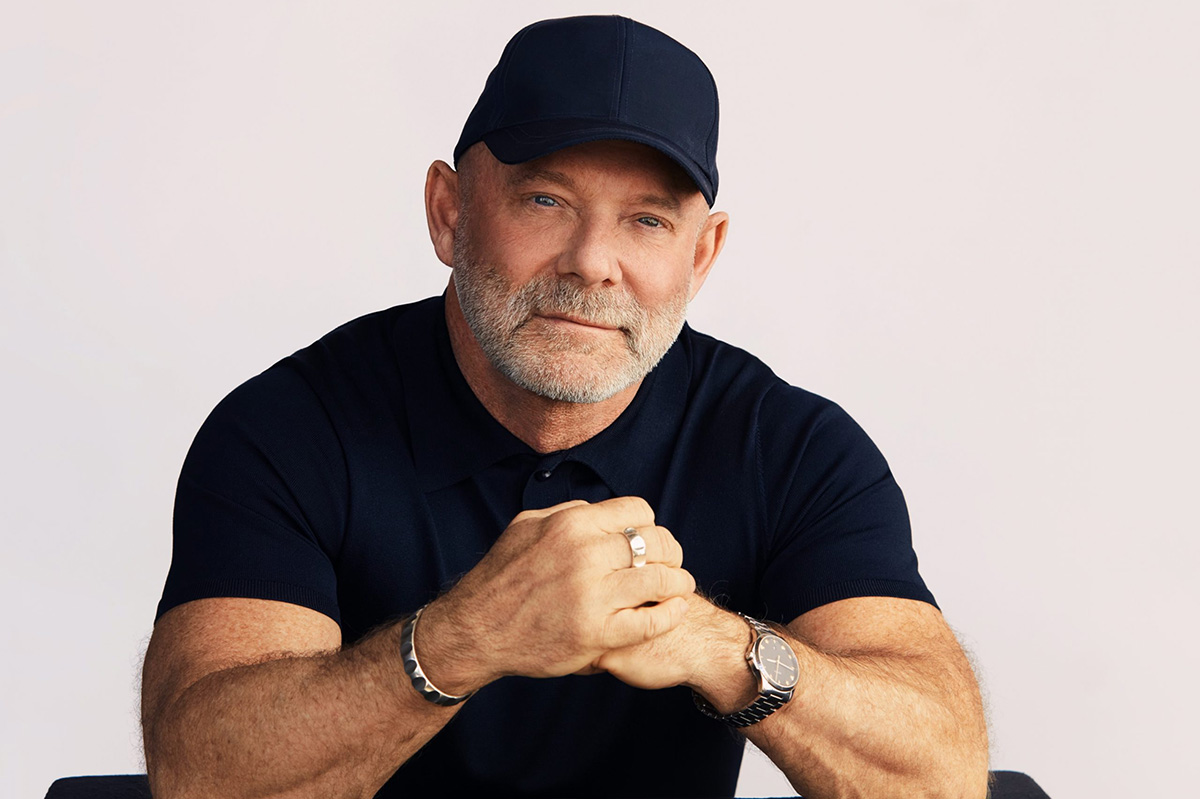
It’s hard to imagine where LGBTQ+ television would be without “Queer Eye for the Straight Guy,” the trailblazing reality series that premiered in 2003.
Each episode of this Emmy-winning show saw a group of gays converge on a struggling man — the titular straight guy — and offer nonstop wit while organizing his endlessly messy life. This program about a group of homosexual helpers took the world by storm, furthering the love of gay television begun by shows like “Will and Grace” but bringing it into the growing medium of reality TV. Of course, it wasn’t perfect; “Queer Eye for the Straight Guy” often cast its experts less as multi-faceted queer folks and more as sources of early 2000s gay jokes. But despite these pitfalls, it’s undeniable that the original program explored the realities of being gay in a way audiences had never seen before. It was a monumental piece of LGBTQ+ representation, and its success is largely owed to the man who fought to get this show made: producer David Collins.
Collins spoke with the Blade from his Los Angeles home, where he’s spent the past few years living with his husband and his two daughters. David spoke fondly of his many years in the industry, detailing how it feels to be such a huge part of LGBTQ+ history. He explained, however, that he didn’t initially set out to alter how queer people were seen on television. “I never went out to make gay television,” said the producer. “I went out to tell great stories.”
“I’m a hillbilly from Ohio, and I thought I was going to be an editor,” David laughed, looking back on his career. “I interned at the Cincinnati Film Office, and I showed up to work my very first day, and the film commissioner was like, ‘Get to the airport right now and pick [someone] up. Don’t talk to them.’ Well, I ended up picking up Jodie Foster.” Collins raved about this car ride that changed his life, with the pair becoming friends and Foster pushing him to become a producer who puts their own media out into the world. Eventually, he did just that, and after learning about the wild new genre that was reality TV, he pitched a series to Bravo: “Queer Eye for the Straight Guy.”
“I was obsessed with Esquire magazine, and they had five categories: fashion, grooming, interior design, culture, food, and wine. So I gave them each a gay, and the Fab Five were born!” Collins said, describing how viewers quickly fell in love with the concept and earned the program four seasons and an Emmy for Outstanding Reality Program. He spoke about how proud he felt creating a show that centered real gay people, not characters in a story, remembering, “To stand in the middle of Times Square and look up and see this massive billboard with the original Queer Eye guys…it wasn’t even a dream come true, because it wasn’t a dream I had even fathomed.”
With his series, people were watching actual gay men and learning the realities of a queer culture that had always been portrayed as a danger to society. Collins tearfully recounted hearing about queer people using the show as a way to connect with their family, saying, “What I’m most proud of that’s come out of Queer Eye [are] the conversations that that series has allowed to have people around their kitchen tables with little boys in Ohio like me who were scared to death that they were going to burn in hell because their pastor was telling them that they were a sinner.”
Now, for all of its trailblazing, the program wasn’t wholly positive; the show’s focus on the central ‘straight guy’ meant it rarely delved into the lives of its Fab Five. Collins regretted that lack of depth but understood that earlier audiences weren’t accustomed to such a nuanced look into queerness — that would have to wait for the reboot.
When “Queer Eye” came out in 2018, audiences were introduced to not only a new Fab Five, but a whole new format (that didn’t rely on a straight person). Now, the series would assist queer folks and allies alike, spotlighting these individuals as well as the queer experts helping them improve their lives. The show has been applauded for its amazing makeovers, but where it truly stands out is its representation, offering a look into individuals across the country and the struggles — along with the immense joys — of being queer in America today.
Fans were disappointed to hear that “Queer Eye” would be ending after its 10th season, but David stressed that they wouldn’t have to be sad for long. “What I will say to you is this: hang tight,” he teased. “There’s yet another version of ‘Queer Eye’ to come, and we’re working on that now.” In the meantime, Collins is continuing his work with new shows like the “House of Stassi,” a series centered on “Vanderpump Rules’”prolific waitress. He’s excited about these new projects, but emphasized that his heart will always belong to “Queer Eye for the Straight Guy” and all that it continues to do for viewers 19 years after its finale.
“It’s not about your new outfit or your new couch or your new whatever. It’s about your humanity,” said Collins, speaking about the core lesson he hopes people take away from the Queer Eye franchise. “It’s about seeing yourself. It’s about dignity. It’s about how confidence breeds success.”
A valuable message that queer folks can benefit from even more now than they did in 2003. And, while it’s unclear just what lies ahead for this franchise, one thing is for sure: “Queer Eye for the Straight Guy” helped people everywhere understand the power that exists within our queerness. It’s a truth that has impacted countless pieces of LGBTQ+ television today, and it’s one that Collins promises to keep alive through whatever hit show he creates next.
a&e features
Jason DePuy on coping with homophobia in ‘Big Brother’ house
First drag queen contestant on CBS show fought to stay positive
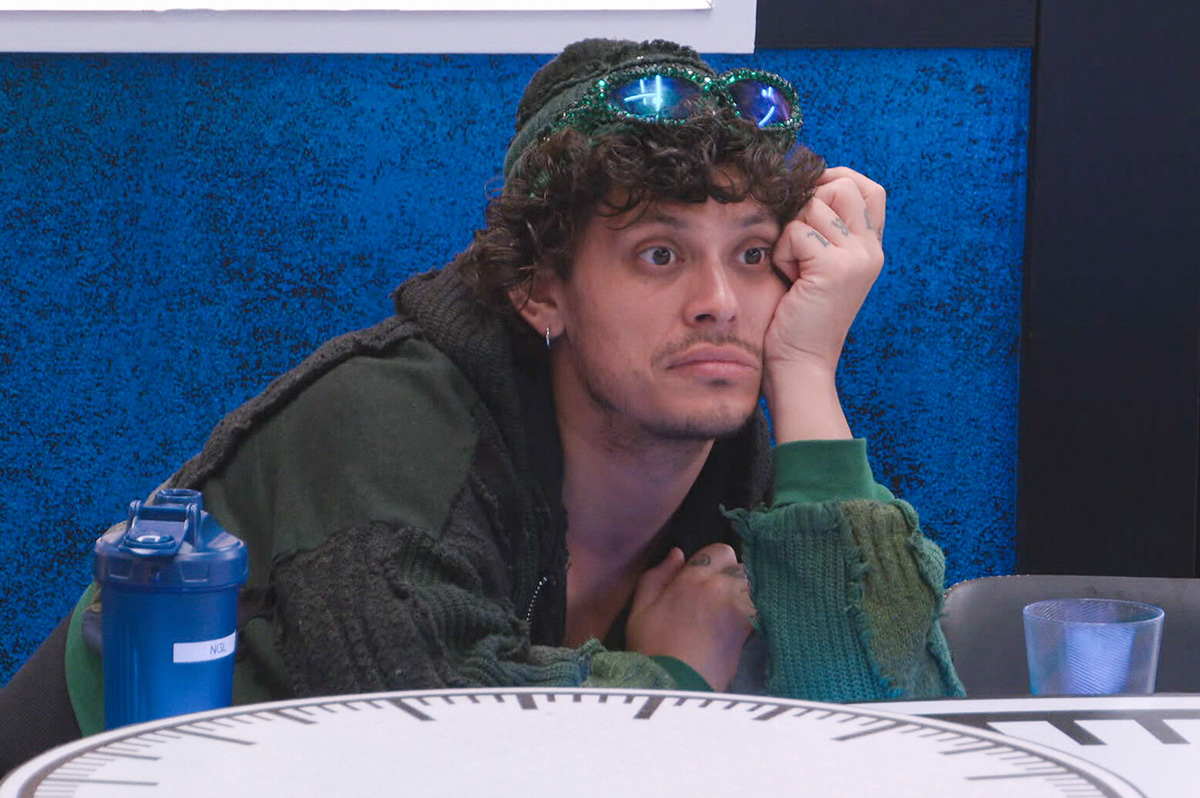
One week after Jason DePuy (known as Salina EsTitties on “RuPaul’s Drag Race”) was bullied and eventually evicted from CBS’s “Big Brother” house, the queer drag performer is still emotionally processing his feelings.
During his 24 days in the reality TV competition, DePuy often had a rough time, with fellow cast member Kamuela “Kamu” Kirk making homophobic comments and feeling isolated.
In a conversation with Head of Household Rick Devens, Kirk left viewers upset when he said, “Bro, miss me with the drag stuff. Miss me. I’m still an MMA guy, and I have an image to uphold.”
Former “Big Brother” contestant Frankie Grande called his words ‘homophobic’ and ‘gross.’ Another comment, where Kirk said he wanted to end DePuy’s career, also received strong backlash online.
Now that he is out of the house, DePuy has been shocked and deeply touched by the love from “Big Brother” fans and former contestants. We chatted with DePuy for this Blade exclusive.
“To know that my community was rallying for me outside the house was the most wonderful thing. Seeing how much people were just wanting to shower me with love was incredible. Even my friends, I went to say hi and give them a hug, and they’re like, ‘Uh, uh, come here.’ They had to hold me and let me know America was feeling for me in a way that I had no idea.”
He added: “To see that reality was just overwhelming, and I couldn’t ask for more.”
Known as a messy player in the house, DePuy often had to fight to stay positive and stand up for himself.
“No one was coming to my rescue. In real life, it’s easy to block people, but in the house, I didn’t have that luxury, so I had to find it within myself to learn how to speak up for myself in a way that wasn’t nasty or biting. I didn’t attack anyone personally, which is what I was the most proud of.”
DePuy acknowledged he has had a history of putting his foot in his mouth when it came to certain “Drag Race”moments, being in the public eye, and making a fool of himself. “I’ve learned my lessons; to see how I handled myself in the ‘Big Brother’ house was amazing.”
While DePuy has been sober for 14 and a half years and has a strong spiritual foundation, in the Big Brother house, he often felt like he couldn’t communicate what he was feeling.
“As a queer person, a person of color, a drag queen, I have to be very careful about how I move. I don’t have the luxury or privilege to just act a certain way or say a certain thing. I have to be very careful; I’m representing me. But who I am is a Latino, a person of recovery, a drag queen, a queer person in the community. I know that there’s a lot of pressure that comes with that. I felt it was safer for me to sit there and just breathe than try to do anything crazy.”
He continued: “I couldn’t speak to the personal attack that was happening in the house, because in my mind I was like, ‘no, this is a game, and I have to play it, put that aside.’”
Not only can viewers watch the episodes, but they can also watch the live feeds of what’s happening. Seeing the fans’ social media posts from people who had watched the episodes and the live feeds also contributed to DePuy realizing that his feelings of discomfort were valid.
“To know that I wasn’t delusional in those moments, that others could see what was happening, has been a lot to take in. Fans and friends let me know the comments made went beyond the game…I’m like, ‘Oh, so my instincts were correct.”
One of the most poignant moments on the live feeds occurred when DePuy was crying, alone in his room, and said how he missed his gay community.
“I really missed my friends. I missed my queer community. We’re so colorful. We’re so loud. We’re so vibrant. We speak off the cuff, and we’re very truthful and honest with how we speak, and it’s fun. We have fun lingo.”
DePuy had to censor his expressions in the house. “Because I can say one thing, but it can mean something different to straight people than it does with my queer brothers and sisters. So, there was a sense of code-switching that I had to do. I had to even put aside some of my queerness in a way sometimes to fit in.”
DePuy was thrilled to be the very first drag queen to ever be cast on the show.
“I’m honored to have been chosen. There’s a million drag queens out there, and to know that I was a contender to come in the house and not even be in drag was like a wow for me. I’m over here in Hollywood, running around these streets with a wig and heels just to make a dollar to survive, and I have to rely on drag to do that. And then to be offered this opportunity and be given the privilege to say, ‘hey, you don’t have to put on the wig for you to be valuable here,’ is just insane to me.”
Prior to his shows, DePuy has been hustling for 15 years, flipping burgers and doing drag at night.
“That has been my life these past since I was 17. So it’s been a long journey; the opportunity to do this out of drag is a very big blessing. I’m honored and grateful to be the representation of my community.”
If you missed Jason on “Big Brother: Unlocked,” the episode can be seen on CBS.com. He will be back on the show for the finale.
a&e features
Rainbows in Revolt on a mission to make LGBTQ artists’ voices heard
Rainbows in Revolt on a mission to make LGBTQ artists’ voices heard
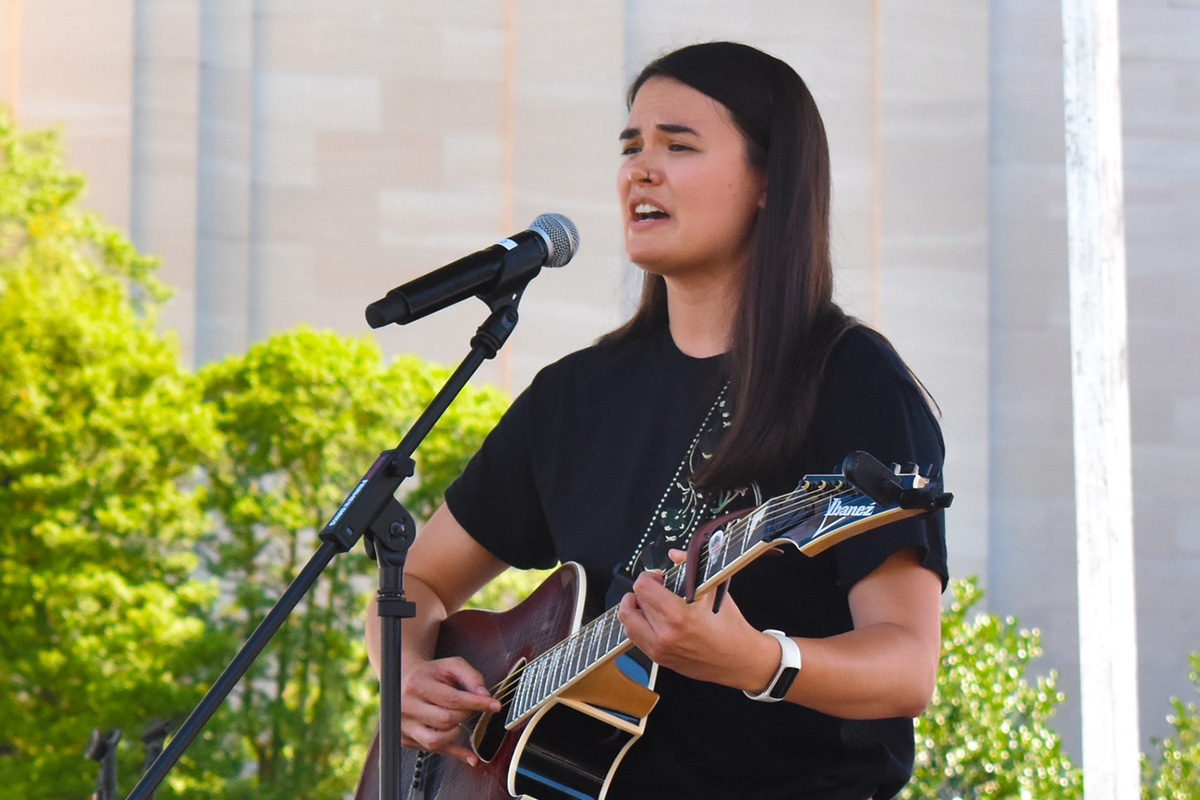
Last month’s Pride celebration in D.C. was so fun. Walking around my first Capital Pride with a $15 lemonade I was loving the madness and the color. Artists and small businesses battling banks you’ve never heard of collecting your personal information so you can spin a wheel to snag free merch. Great music blaring, people actually smiling and enjoying themselves, the “Great” American State Fair could never!
The Monument Stage was on Pennsylvania Avenue, directly in front of the National Gallery of Art and I can’t think of a better venue to see live music. How does someone get on the lineup for Pride? How do we accelerate the visibility of the most talented voices in our community to perform in places like this?
There is certainly not a talent gap, but there is a visibility gap. Chappell Roan went from playing for two people in a parking lot to owning the main stage at Coachella in one year. Whether it is shadowbanning or bias in AI, algorithms have been shown to suppress queer artists. In a digital age, how can queer people break through and show the world how talented they are?
Allison and Matt of Rainbows in Revolt are on a mission to make openly LGBTQ+ artists’ voices heard. Their goal is to find “musicians whose queerness is central to their identity as an artist,” and accelerate them to a place where they can actually reach fans.
The only time queer events seem to be in the spotlight is June, but this should be year round, according to Allison and Matt. Rainbows in Revolt wants to act as a “nucleus” for different sub-communities, finding common ground in the universal language of music.
Matt and Allison founded Rainbows as a way to make cheaper, higher quality merchandise for queer artists. While Rainbows has already pledged 20% of their profits to the LGBTQ+ community, with 10% to Whitman-Walker Health and 10% to LGBTQ+ organizations in need, this is just the beginning of the work that they do.
Rainbows “does the dirty work” that artists normally struggle to do on their own with limited resources. Interviews, artist profiles, social promotion, playlist discovery, radio outreach, and merch-funded support. This work is normally expensive, time consuming, and requires lots of different skills. Musicians don’t want to be editing clips to post online. Standup comedians don’t want to make graphics for their tour dates. They want to write more. They want to focus on their craft.
In addition to helping artists find their audience, Rainbows has built other digital tools to help queer people connect, including an interactive Safe Space Map for most major cities. It is hard to know which places are truly safe and supportive just from a simple Google search. Attitudes and actions change, and there should be a simple way for queer people to find other places that align with them. The Safe Spaces Maps are all up to date, and are tagged and filterable. Instead of relying on forums and word of mouth, Rainbows has created a centralized way to find authentic community quickly.
I had a chance to talk with Allison and Matt at Pride where Lily Erin, one of their signature artists, was performing on the Monument stage. Lily Erin is a folk singer who is familiar and forging her own path. Her bittersweet sound echoes through Acadia, and her garb mirrors the New England athletes I grew up with. Gorp Core meets streetwear. A graphic tee, hiking shorts, and creamsicle Jordans.
Her debut single, “Bus Stop,” tells a sad story about unconditional love, and the conditions that still seem to come with it. Graduating into lockdown, Erin needed a new way to connect with herself and others. Lily made “Bus Stop” without an intention to share it, but doing so was a liberation. People have been responding to her honesty around queer-ness, family, and the “ghosts which haunt us” even in the daytime.
Rainbows in Revolt has helped Lily Erin go from bars and backyards to The Monument Stage at Pride. This is a meteoric rise, and a testament to both Erin’s talent and the work of Rainbows to promote her. “A little encouragement goes a long way with early artists,” and by “planting a seed” Rainbows is already seeing their artist garden grow. Community is power, and Erin is a perfect example of how effective simple modern techniques of promotion can be.
A next step for Rainbows is putting on shows themselves. On Oct. 3, Rainbows in Revolt will host an Evening with Ray Boltz at the National City Christian Church. Boltz grew up in the Catholic Church and for many years was the soundtrack to many services, youth camps, and church groups. He was celebrated by millions until he came out in 2008. Allison remembers her community “never playing his music again.”
Rainbows in Revolt is helping him to return to the church, and proving that identity does not need to be exclusive. We live in a complicated world with complicated lines being drawn. Boltz proves that these lines don’t exist, and will be breaking down barriers to bring together communities. To Allison, “a trans woman standing next to a straight white man in church is a powerful teacher.”
The Safe Space maps bridge all types of spaces, and one of the unlikely ones is, perhaps, churches. Matt said that “BYU has only nine safe spaces around their campus and seven of them are churches.” Not all churches are anti-gay, and many times they are the only place for people to find community.
Rainbows in Revolt is just getting started bridging gaps and building community.

Gay-owned pizzeria in Dupont Circle burglarized

Advocates honored at Engendered Spirit Awards

Two awesome, affordable rides

Proposed Indian foreign funding law overhaul could further pressure LGBTQ groups

Why we need to protect ‘sacrilegious’ art

Black Educated Lesbians: A movement rooted in community

I respect AOC, even though I often disagree with her

Chicago’s LGBTQ+ youth: Why their zip code still matters

Hegseth uses transphobic slur while campaigning for Iowa congressman

Trump-Vance administration’s LGBTQ brain drain: what you need to know
-

 Opinions5 days ago
I respect AOC, even though I often disagree with her
-
Opinions5 days ago
Black Educated Lesbians: A movement rooted in community
-
Illinois5 days ago
Chicago’s LGBTQ+ youth: Why their zip code still matters
-
U.S. Military/Pentagon5 days ago
Hegseth uses transphobic slur while campaigning for Iowa congressman